
From Market Bounty to Kitchen Creativity: Cultivating Food Joy Through Local Connections
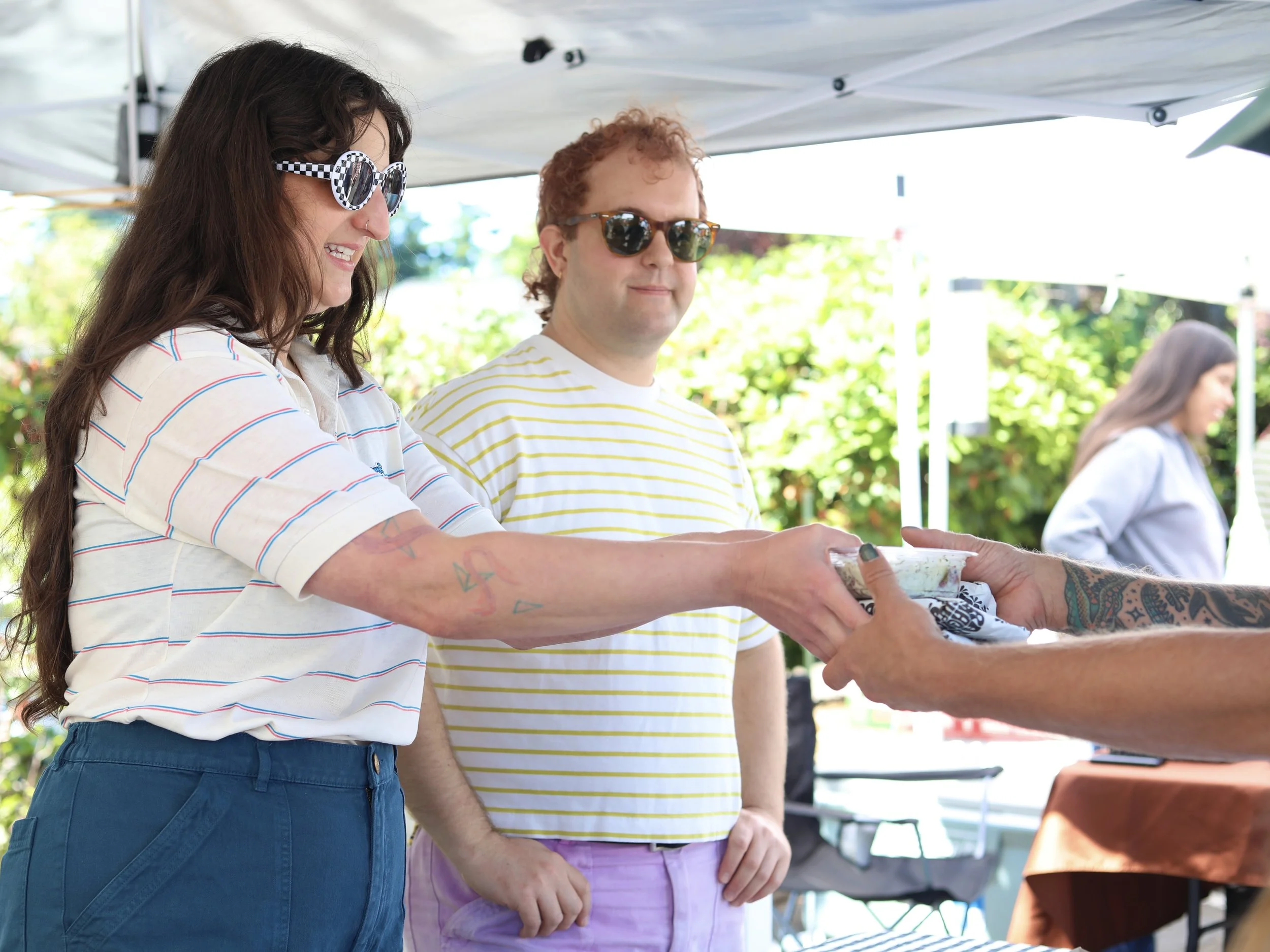
Michelle hands a customer some of Rad Magic’s made-from-scratch plant-based vegan meat products.
A market stall can be the beginning of something delicious. Culinary Connections explores how local ingredients inspire chefs and restaurants to bring the flavors of Oregon to diners across the state.
“Every living creature, its goal is to find something yummy,” Justin says.
At Rad Magic Subs, that search for something delicious has led owners Michelle and Justin on a journey from their home kitchen, to a vegan restaurant, to a farmers market booth where the ingredients they buy become an essential part of their restaurant’s menu and offerings.
In some ways, the couple’s path into the restaurant industry was perhaps pre-destined: Justin spent his childhood watching his parents run pizza shops, while Michelle's family operated a bakery and café. Those early experiences gave them both an understanding of the industry that stayed with them into adulthood, eventually guiding their professional lives back toward food and restaurants.
During the pandemic, the couple went on a mission to find the perfect vegan, East Coast deli-style submarine sandwich. But even in a vegan-friendly city like Portland, their search proved impossible. So they started experimenting in their own kitchen, making sandwiches first for themselves, and then for friends. The response from friends was so positive they started selling sandwiches at pop up events around Portland, where they often sold out of their plant-based subs.
In 2021, they opened a food cart in a vegan business cluster Northeast Portland's Gateway neighborhood, using the small operation to build a a bigger following. Just like the pop-up events, Rad Magic eventually outgrew its food truck and so began looking for a brick-and-mortar location.
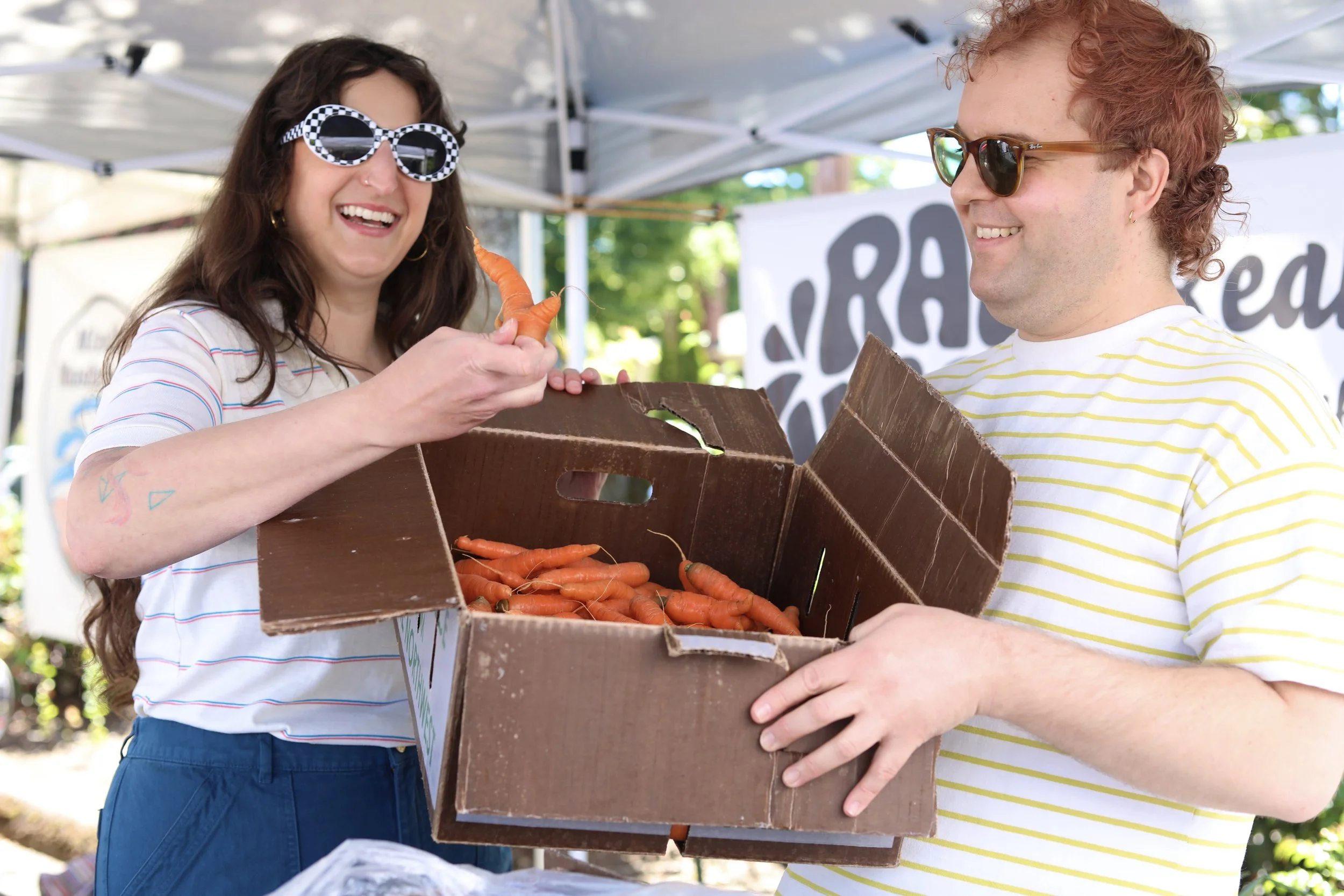
Michelle and Justin smile as they check out the carrots they purchased at the market.
Miraculously, they found a truly ideal and idyllic place to call their restaurant home: the same Southeast Portland neighborhood where they live.
“We feel really lucky,” Justin says. “We actually live in this neighborhood. We live about a mile and a half up the street. So we get to walk and bike to work, which is really nice.”
Rad Magic Subs has been successful and sustainable since opening its brick-and-mortar location 3 years ago, and that success has given Justin and Michelle room to think about what comes next. Still, they say they approach business growth carefully, with little interest in expanding simply for the sake of getting bigger.
“We want to have intentional growth that builds our values and instills our values and tries to at least have some part of that revenue supporting community and local food,” Justin says.
When they began thinking about how to expand the restaurant's reach, vending at a farmers market offered a way to deepen those relationships while introducing the business to people who might not otherwise walk through its doors.
“The farmers market made a lot of sense because there's already farmers we had personal relationships with,” Justin says. “We've been doing a CSA for six years and it's inspired a lot of our food here at the restaurant, so it kind of made sense to lean into that and to make that conduit between the market and the farms to what we serve here.”
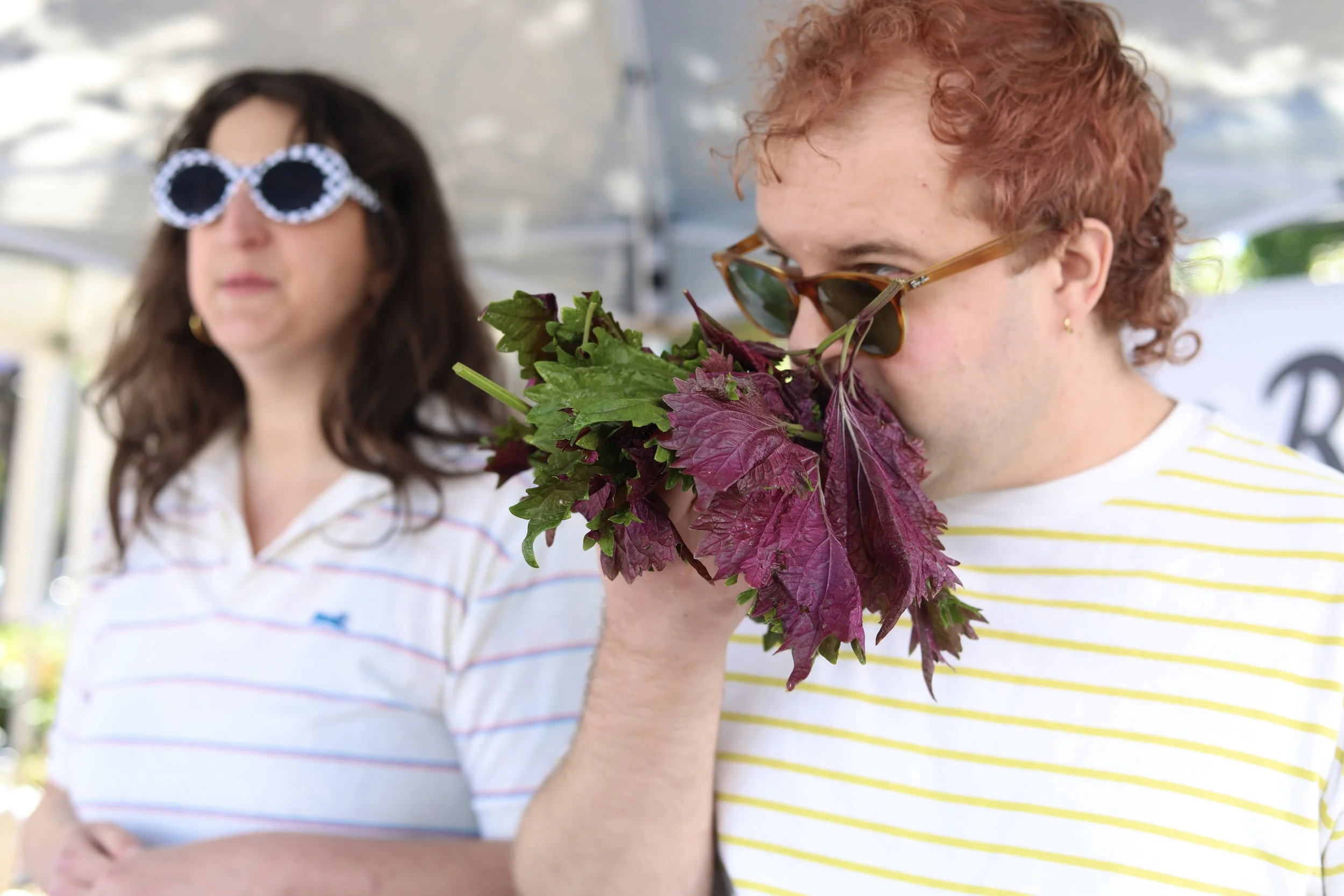
Justin smells the vibrant fragrance of shiso while Michelle connects with market customers.
While plenty of restaurants grow their business by selling both hot and cold prepared foods and meals at the market, Michelle and Justin chose not to bring Rad Magic’s sandwiches to the market. Instead, they sell packages of the plant-based meats featured in their subs, including pepperoni and other new products they’ve never sold before.
“We didn't really know what to expect going into it,” Justin says. “We handed out so many samples. But the feedback was really great. People were really stoked to see us and have us be there.”
At their first market, they sold out.
“We didn't really know what to expect going into it,” Justin says. “But the feedback was really great. People were really stoked to see us and have us be there. We handed out so many samples.”
The restaurant's plant-based meats begin with a flavor base made from carrots, onions, celery, and mushrooms. This year, Justin expects to buy roughly 10 pounds of each from the market in a single week, then spend the following days cooking, processing, and roasting those ingredients into a deeply flavorful paste.
The market also gives them access to ingredients that invite experimentation. This season, Rad Magic has been working with Naomi of Farm D’Ici, who also vends at Woodstock Farmers Market, to figure out unique ways to incorporate red shiso into their subs. The herb, known for its vibrant color and bright, herbaceous flavor with hints of mint and citrus, is unusual for a sandwich shop menu, but that’s part of the appeal for Justin and Michelle.
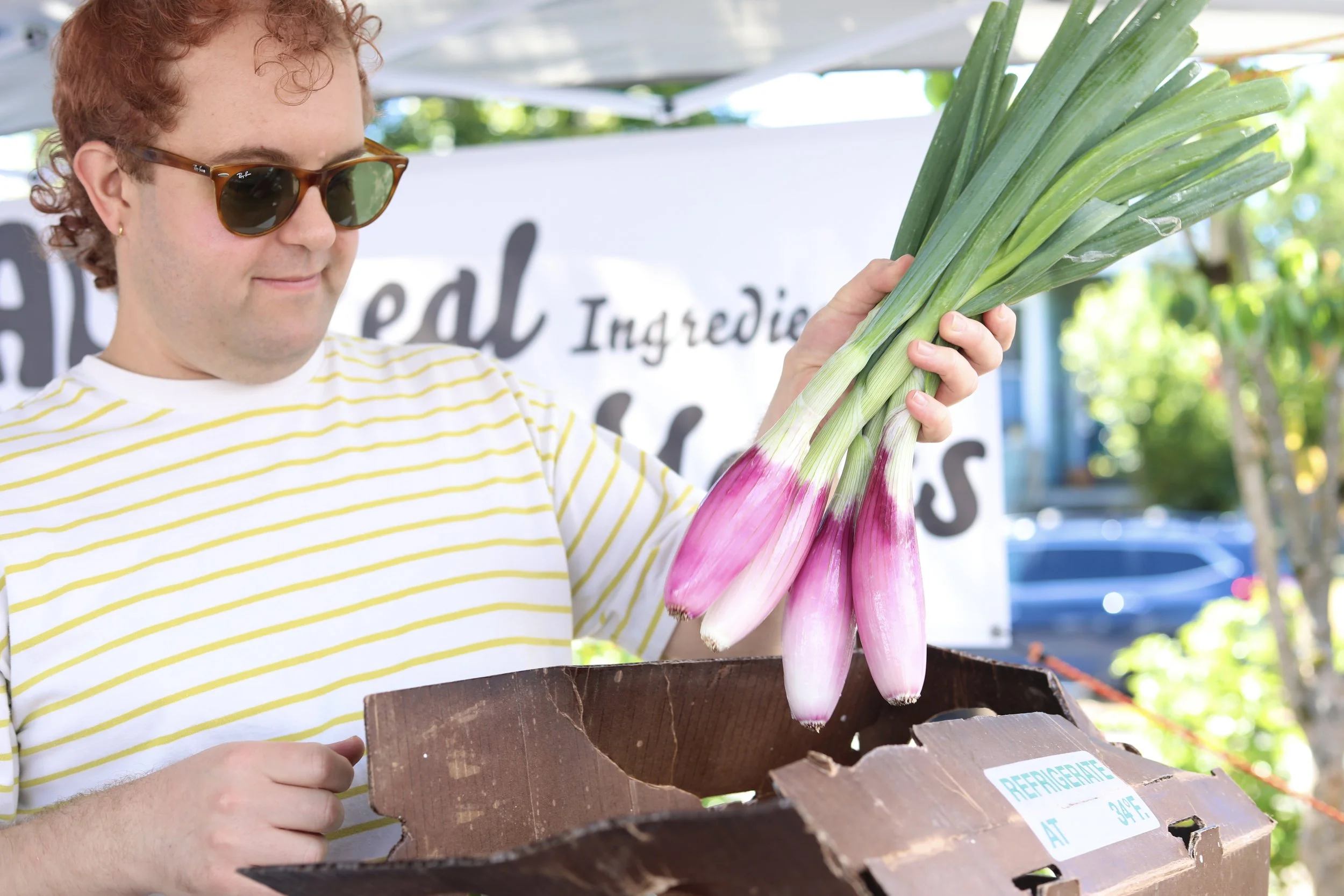
Justin unboxes purple onions purchased from fellow market vendor Farm D’Ici.
“We want to get eaters out of the mindset that every sandwich has to have tomato, onion, cucumber. It's really nice to be able to work interesting ingredients into food here because people really want ranch, mustard and mayo, but they also want to try new stuff too,” Justin says.
That willingness to work with what is available has also changed the way Rad Magic goes about sourcing ingredients.
Before opening the restaurant, Justin worked in corporate food distribution, where he saw the inequities and vulnerabilities built into large-scale supply chains.
Those experiences have made the relationships Justin and Michelle build with local farmers and food producers feel all the more important, even as those businesses face their own uncertainties, from weather and crop challenges to the realities of running a small business.
Knowing that local producers face their own uncertainties has encouraged Justin and Michelle to start sourcing Rad Magic’s food supply around what is available and in season rather than holding tightly to a fixed list of ingredients.
“I think the right way to shop at the market is to show up and be ready to see what's yummy,” Justin insists. “Like, what is bountiful, and what can we make out of that? That's what delis have always been, a place that takes really fine ingredients from around them and makes good sandwiches and salads. And we could do a version of that that was like, imported peppers and such, but we've chosen to go the market way because we're just so lucky here in Oregon to have amazing produce.”
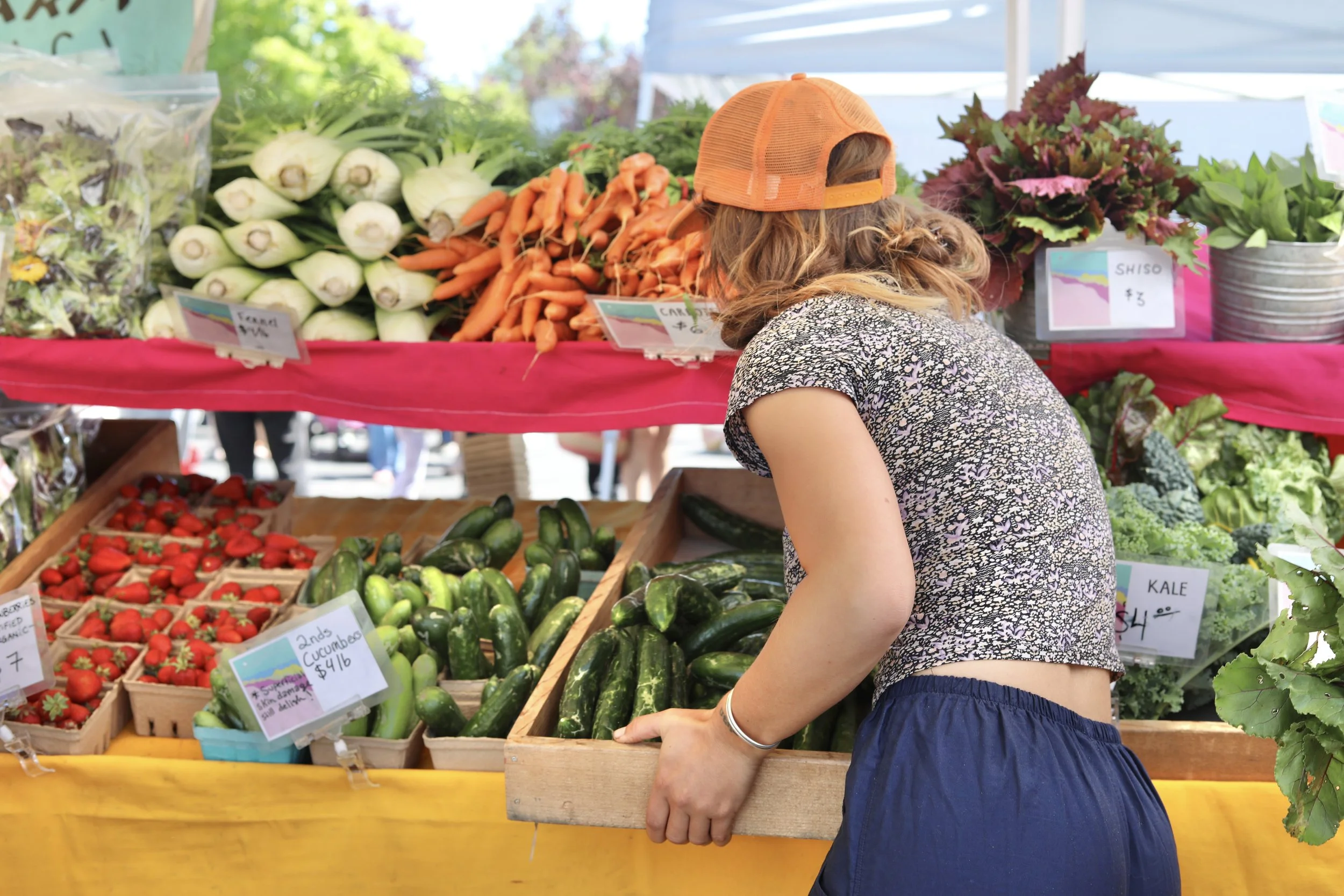
A Farm D’Ici crew member replenishes cucumbers at the farm’s booth at the Woodstock Farmers Market.
And while relationships with small food businesses can be unpredictable, Justin sees that uncertainty differently from the challenges of navigating large-scale food supply chains. People get sick, families have emergencies, and products sometimes disappear for weeks. But knowing the people behind the businesses makes room for understanding and flexibility. A delayed order becomes something to work around, often opening the door to culinary creativity rather than disrupting the relationship.
“People are people,” Justin says. “As long as we acknowledge that and allow for, you know, to be out of chips for a couple weeks because family stuff's going on, everybody understands that. Everybody knows the reality of what it is to be a person in a community and working.”
That understanding, they say, has helped their restaurant and the businesses they work with remain resilient. It has also given them a deeper appreciation for the places, like the farmers market, where those relationships are built and sustained.
With their home, restaurant, and market all close by, tending those relationships becomes part of the rhythm of Michelle and Justin’s everyday lives: something delicious, made with care and local ingredients, shared with people in their neighborhood and community.
“Being able to make stuff, go back to the farmers market, hand samples off to the people that we bought the produce from a couple weeks before, and then talk to them next week and hear how they ate some of our food while they took a break from harvesting… that doesn't make anybody money, but it’s a really good feeling thing.”
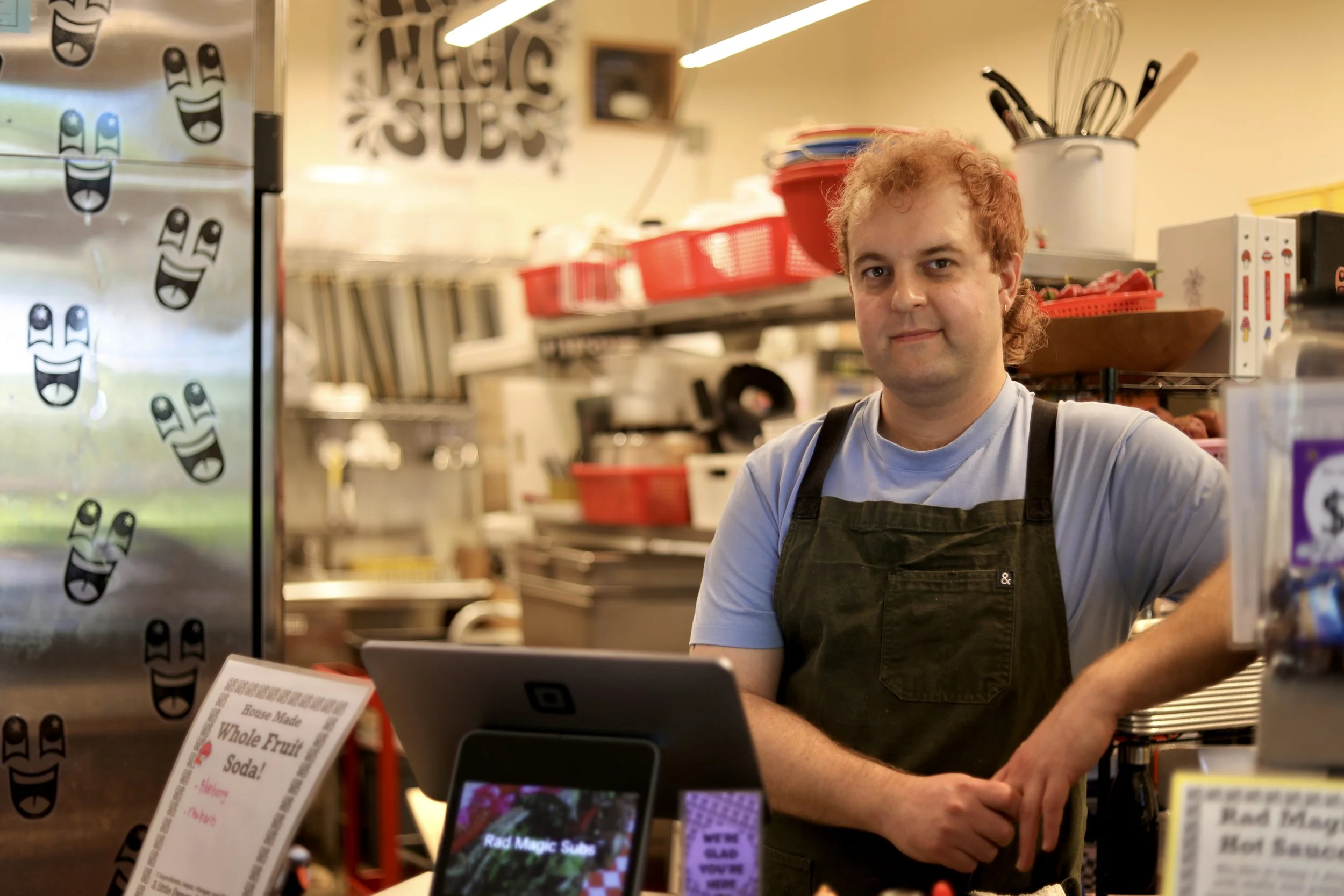
Justin stands behind the counter at Rad Magic’s restaurant.