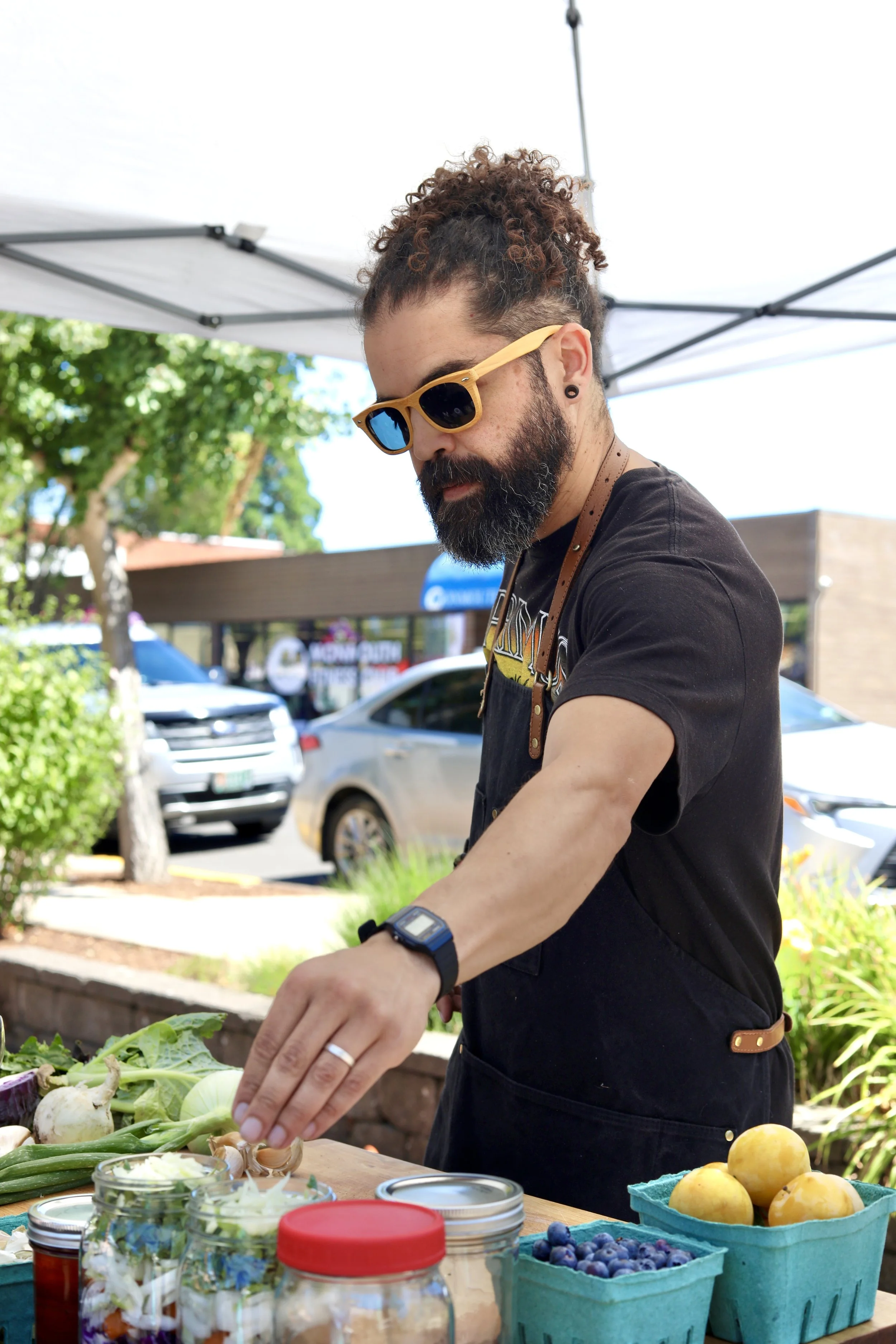
Andre Uribe shows market visitors ingredients — all purchased at the market — he intends to use during a cooking demonstration.
“I am not a chef. That’s not my identity at all,” says Andre Uribe.
This declaration seems surprising coming from someone whose work has taken him through restaurant kitchens, into the homes of public figures and in front of culinary classrooms for nearly two decades.
"I see myself more as somebody that's trying to tell a story," he says. "I don't necessarily love cooking, but I love food, because I see power when I see food."
So it makes sense that Andre’s entry into the culinary industry didn’t start with the goal of becoming a chef.
After moving to the United States from Colombia, he overstayed his visa and spent years unable to work legally. While searching for jobs, the opportunity to work with food found him.
"I met some Mexicans that were like, ‘Dude, you can work in a kitchen, and I was like, ‘Yeah, my people are in the kitchen! That's where I'm gonna be,” he recalls. “I didn't want to be a chef. It just happened.”
And while cooking started as a way to make a living, it reminded Andre how it could also be a conduit for connection and community.
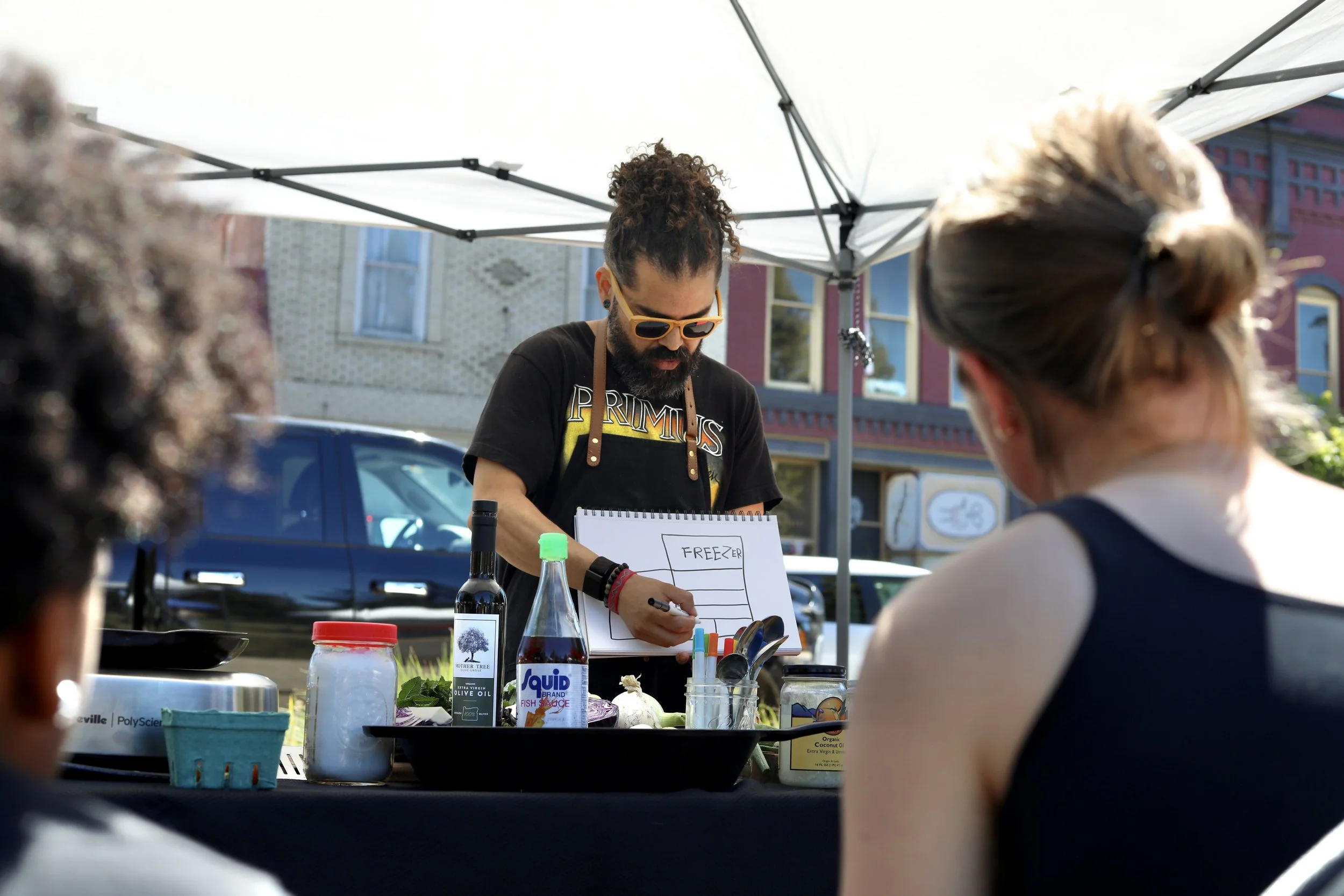
Andre draws a map depicting one of his food organization systems during cooking demonstration at Cultural Harvest Collective’s Sunday market.
When Andre was growing up in Colombia, weekend trips to the market were both ordinary and extraordinary: a familiar part of family life, yet filled with the sights, sounds, and smells that made food feel alive, and where the distance between producer and plate was almost nonexistent.
"They would slaughter the animals that day because people come to buy that day," Andre recalls. "There's no refrigeration, so they have the animal hanging in their stalls. And everyone in Colombia eats blood sausage on the weekends because that’s when they slaughter the animal; we utilize the whole animal, including the blood — it’s nutritious. They’d do the lechona right there in the market — stuff the pig with lentils and rice and roast the whole thing."
His memories linger on the people as much as the food, especially the ways the market made it possible for people of many identities and experiences to share common ground.
"You go with your family. You see your friends. There's a park. Everyone's there. It's part of life. Because the weather where I lived doesn't really change, every weekend was the same. That's simply what people did,” he says. "Regardless of your socioeconomic status, everyone is together in the same place. Food brings you together."
Those weekends at the market would shape the way Andre understands and interacts with food for decades to come.
After several years cooking in restaurants of all sorts, he left a job he disliked, set up a website, and began building a business as a private chef, an endeavor that eventually placed him in the kitchens of many well-known public figures.
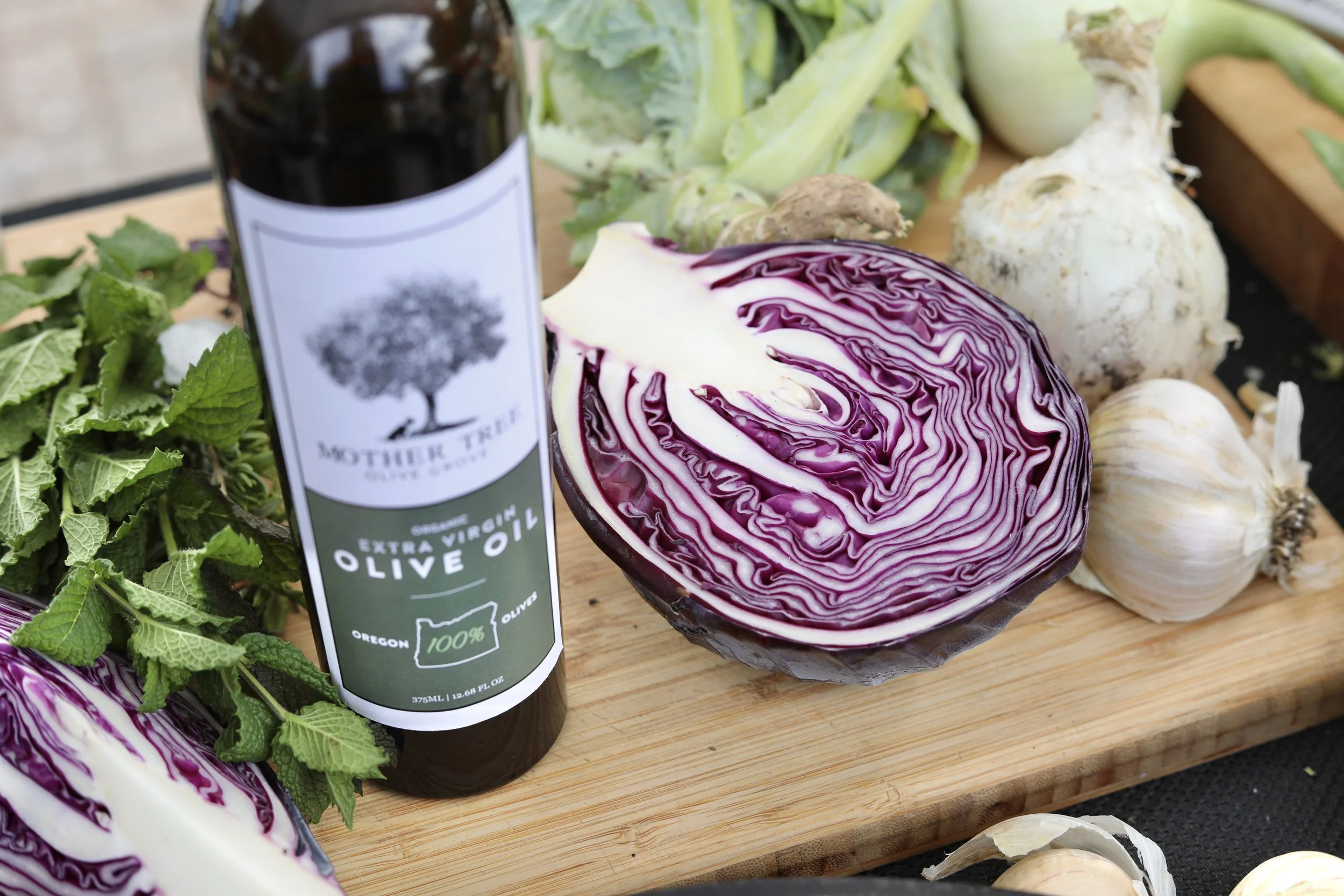
Fresh produce purchased at the market (plus a contribution of cabbage from Andre’s home garden) to be used in the cooking demonstration.
And though it’s often expected that high-profile clients like celebrity entertainers and professional athletes would want award-winning culinary artists to make Michelin star-level meals, Andre says his interest in cultivating connection through storytelling is what kept opportunity’s door open for him.
“Yeah these are like, rich people that are hiring me to cook fancy things for them, but I wasn't interested in going over there and cooking for them," Andre says.
"I was interested in cooking with them. I’m not a great chef, but I can interact with humans. My only goal was like, I just want to be invited again. And then I realized, it's so easy to be invited again — just be a nice human being.”
He found that those private clients responded to the experience because the meal carried something beyond the food itself.
"We can hire somebody to come and cook, or we can hire this guy that will tell us a story about his local farmer and why this carrot soup is so exciting, and who keeps a journal about carrots,” he smiles.
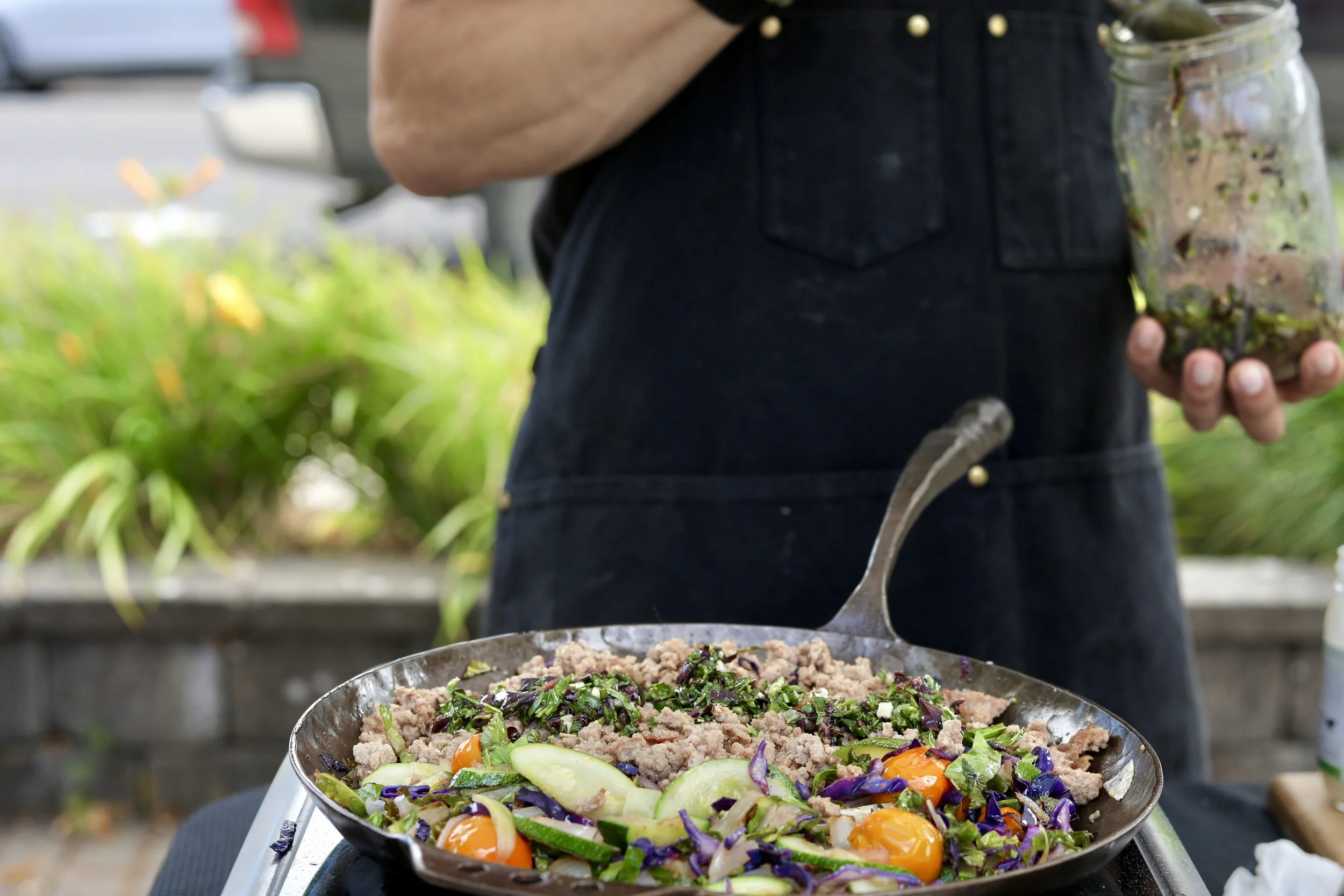
Andre adds an herbed chimmichurri sauce to a dish of sautéed lamb from market vendor Dot Ranch and seasonal vegetables.
And those stories begin with relationships formed and deepened at farmers markets.
Restaurant kitchens introduced him to seasonal ingredients, and his private chef and meal preparation business depended on weekly trips to local growers, where he sourced the produce, meat, and eggs that became meals for his clients and customers. The same ingredients now travel with him into community cooking classes, where the food on the table often becomes a way to introduce students to the farmers who produced it.
Now a husband and father of three, he goes with his family to the market most Saturdays to gather food for the next week, and says that easy access to farm fresh food was an important part of his decision to move to Oregon.
For Andre, farmers markets are part of the foundation of the communities where he chooses to live and work. "If there was no market here, I wouldn't live here," he says. “The market represents sovereignty and freedom and community and health, and without it, all those things go away."
His commitment to cultivating that community extends beyond just shopping at farmers markets — it also helped create one.
Andre first met Cultural Harvest Collective founder and director Nikita Vincent after she reached out online to compliment the architecture of his home. As a flower farmer, she had also been following Andre's work while looking for chefs interested in sourcing edible flowers.
When Andre invited her over, the conversation quickly turned from design to food, farming, and their shared hopes for strengthening the food culture of the Salem and central Willamette Valley.
Later, when Nikita was looking for a commissary kitchen, Andre connected her with a local space he knew. There, she met someone who encouraged her to create a BIPOC-led farmers market in Monmouth.
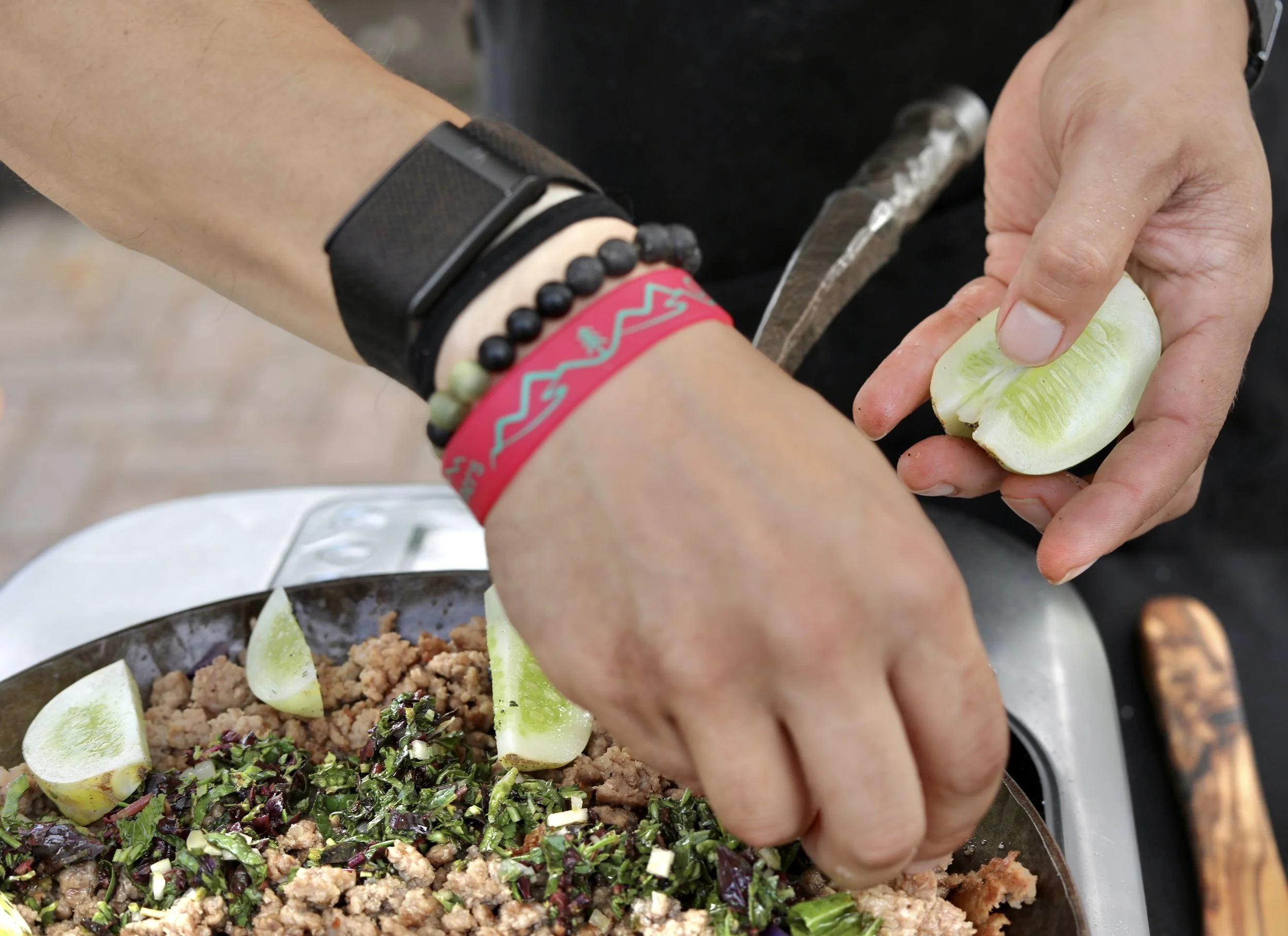
Andre adds lemon cucumbers to the sautéed lamb and veggie dish.
This July, Andre led a cooking demonstration at Cultural Harvest Collective's farmers market, inviting vendors and shoppers to prepare a meal rooted in simple techniques and seasonal ingredients. His focus was not culinary precision but the everyday habits that support long, healthy lives.
"I teach people how to cook because longevity is something people care about," he says. "That's my storefront."
The ingredients all came from the market that morning: garlic and herbs for a vibrant chimichurri, bright yellow lemon cucumbers, and whole chickens donated by one of the market's farmers.
“They hire me to teach people how to cook, but I'm not really there to teach them how to cook. I'm there to plant some seeds and be like, 'Hey dude, eating is important because it's an act of self-love. Have you tried that? It's pretty fun.'"
Community cooking has become the place where those conversations feel most alive. It brings together the parts of Andre's work that matter most: preparing food, gathering people, and creating opportunities to share stories.
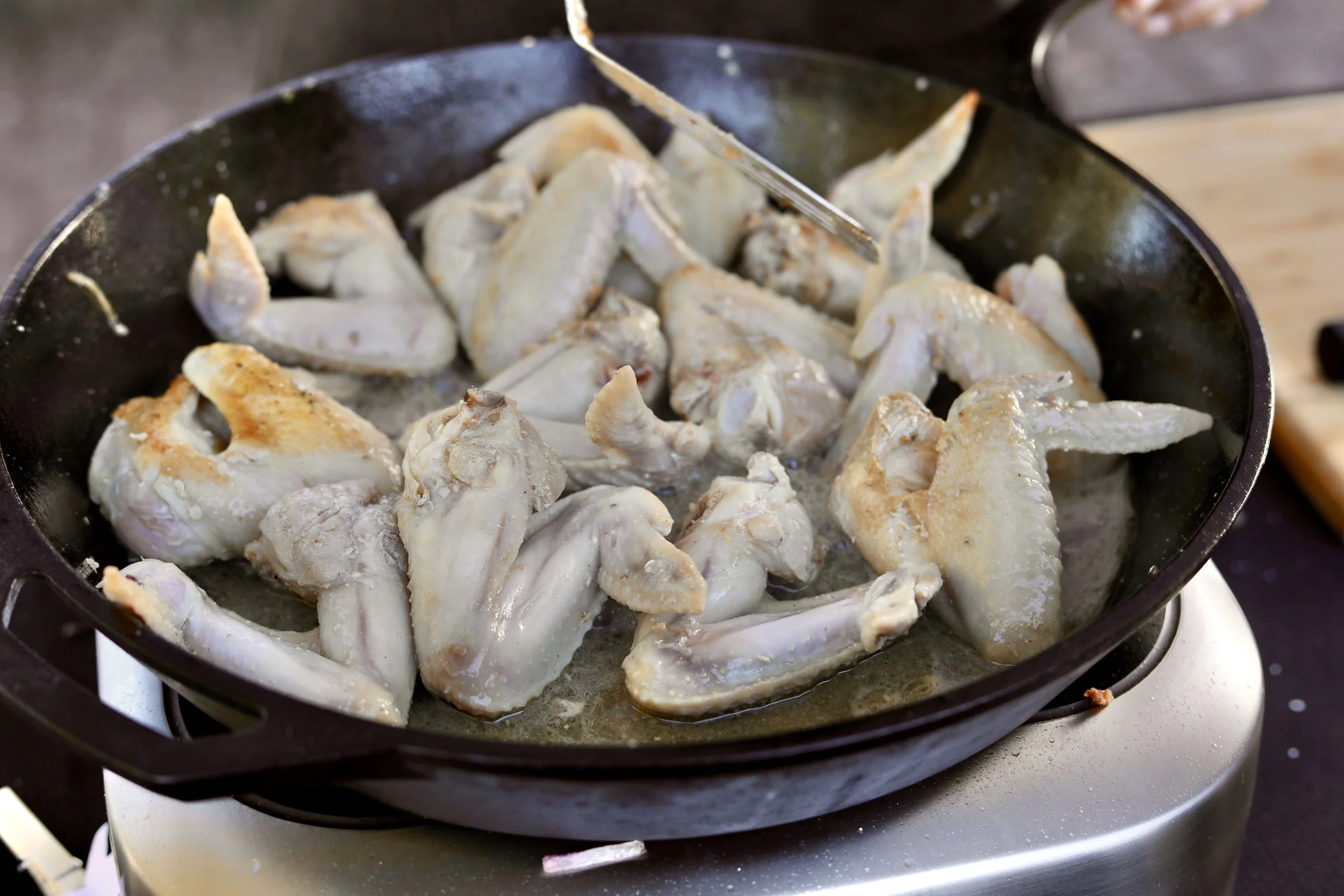
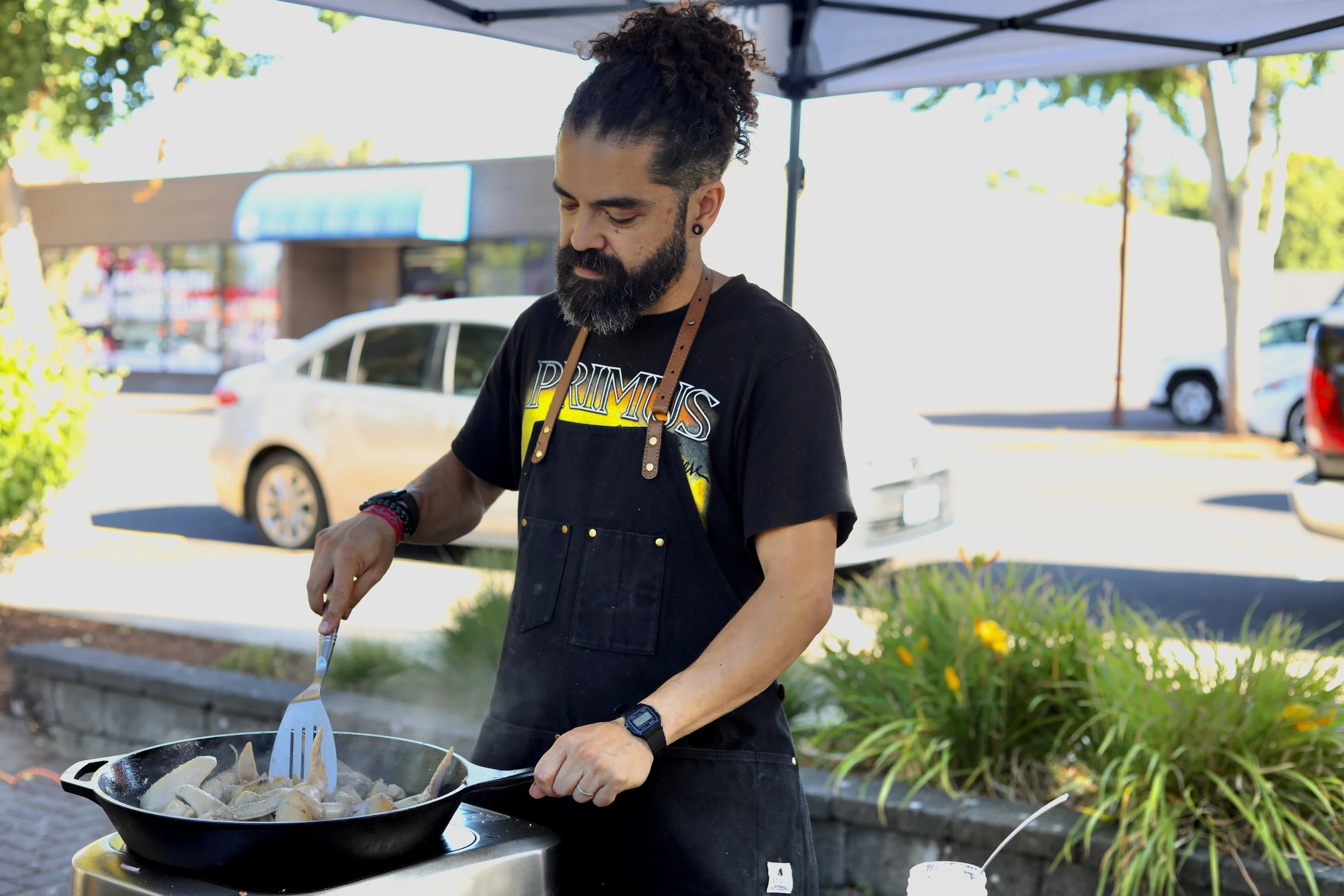
Chicken wings from market vendor F.R.I.E.N.D.S. Inc. cook in Andre’s cast iron skillet.
That next chapter in Andre’s culinary journey has taken shape through Longevity Cooking Club, a YouTube channel where this self-professed “anti-chef” can use food-focused filmmaking to cultivate community that’s inclusive, intimate, innovative and informative.
Rather than presenting cooking as a performance or chasing culinary perfection, his videos invite viewers into a slower, more personal way of thinking about food. He shares meals that are approachable, celebrates seasonal ingredients, and introduces the farmers and growing practices behind them, encouraging people to see healthy eating as something rooted in relationships, rituals, and reverence instead of rules.
"Food is the vehicle that allows me to speak in front of a group of people," he says. "Storytelling is everything, and I’m learning how to do it through video because then I can inspire a lot of people."
The conversations Andre begins at the market, in the kitchen, and around the table can now reach people far beyond those physical spaces. His videos create another entry point for people to discover the relationships behind their food, connect cooking with local agriculture, and see the farmers market as part of everyday life rather than a separate destination.