
Community and Belonging
Strong markets are built on strong relationships.
These resources can help you connect with community partners, reach customers and neighbors who may not yet feel part of the market, and make your market a place that serves everyone around it.
-
Building a strong network of community members and organizations that support the farmers market is a great way to build a sustainable market. It’s also one of the most effective ways to make your market a place that reflects and serves the whole community, since partners can help you reach neighbors who may not yet feel connected to the market. This chapter from the Kentucky Farmers Market Toolkit suggests whom to approach as potential partners and how to approach them, followed by examples of successful partnerships from across Kentucky. Evaluation tools at the end help you measure the impact of your partnerships.
-
Faith communities are often trusted gathering places with strong ties to neighbors, including many who may not yet shop at the farmers market. This toolkit from RAFI (Rural Advancement Foundation International), walks market managers through building partnerships with faith communities, from finding partners and making first contact to planning, budgeting, and evaluating a program. It also covers how to welcome SNAP shoppers. Case studies show how three organizations made partnerships work, and the appendix includes a sample letter of introduction, a project design worksheet, and budget and funder handouts you can adapt for your own market.
Webinar Recordings
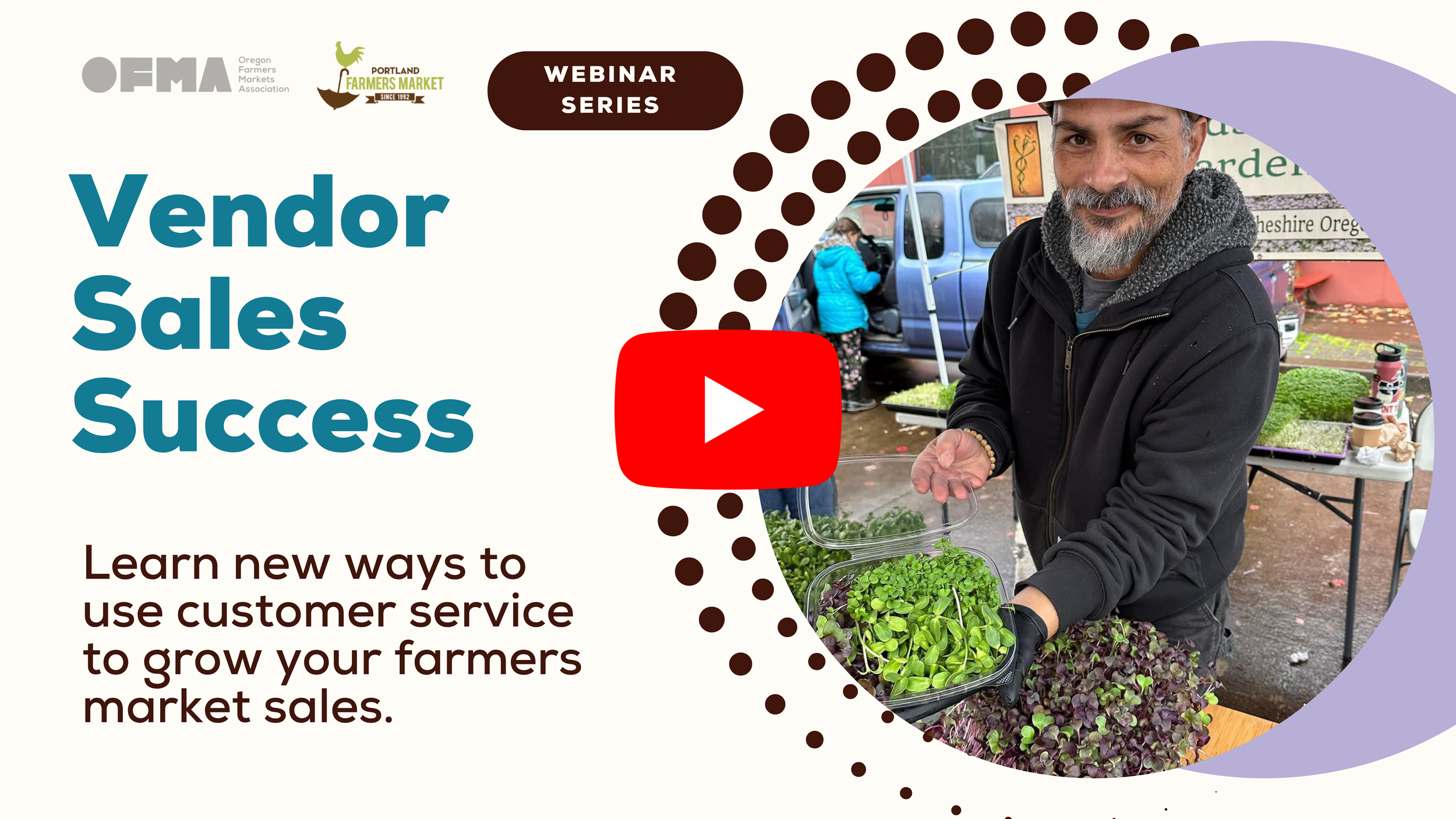
Vendors who build real connections with shoppers see it in their sales, and in how welcome everyone feels at the market. This three-part Vendor Sales Success webinar series, created in collaboration with Portland Farmers Markets, shows vendors how to talk with shoppers clearly and compassionately, serve a diverse customer base, and share their food traditions with pride.
The sessions cover:
Benefits programs: how hunger leads to food insecurity in Oregon, and how to talk with shoppers who use SNAP and DUFB.
Communication: how language, culture, and unconscious bias shape the shopper experience, and small shifts that build trust and bring shoppers back.
Storytelling and trust: how to share food traditions, avoid cultural appropriation, and create a welcoming booth that deepens customer relationships.
Market managers can watch to build their own understanding, then share the playlist with vendors who want to grow their skills and their sales.
At first glance, farmers markets are a place where producers sell their farm products directly to individuals and families in their community. They are also a venue for community development. When markets prioritize partnerships, they solidify their place in the community as a space for economic vitality, food access, relationship building, and general prosperity.
In this recorded webinar, the Community Farm Alliance shares how Kentucky farmers markets can harness their communities to build an even better market. The examples come from Kentucky, but the ideas apply to markets anywhere.